Concentration of Biodiversity

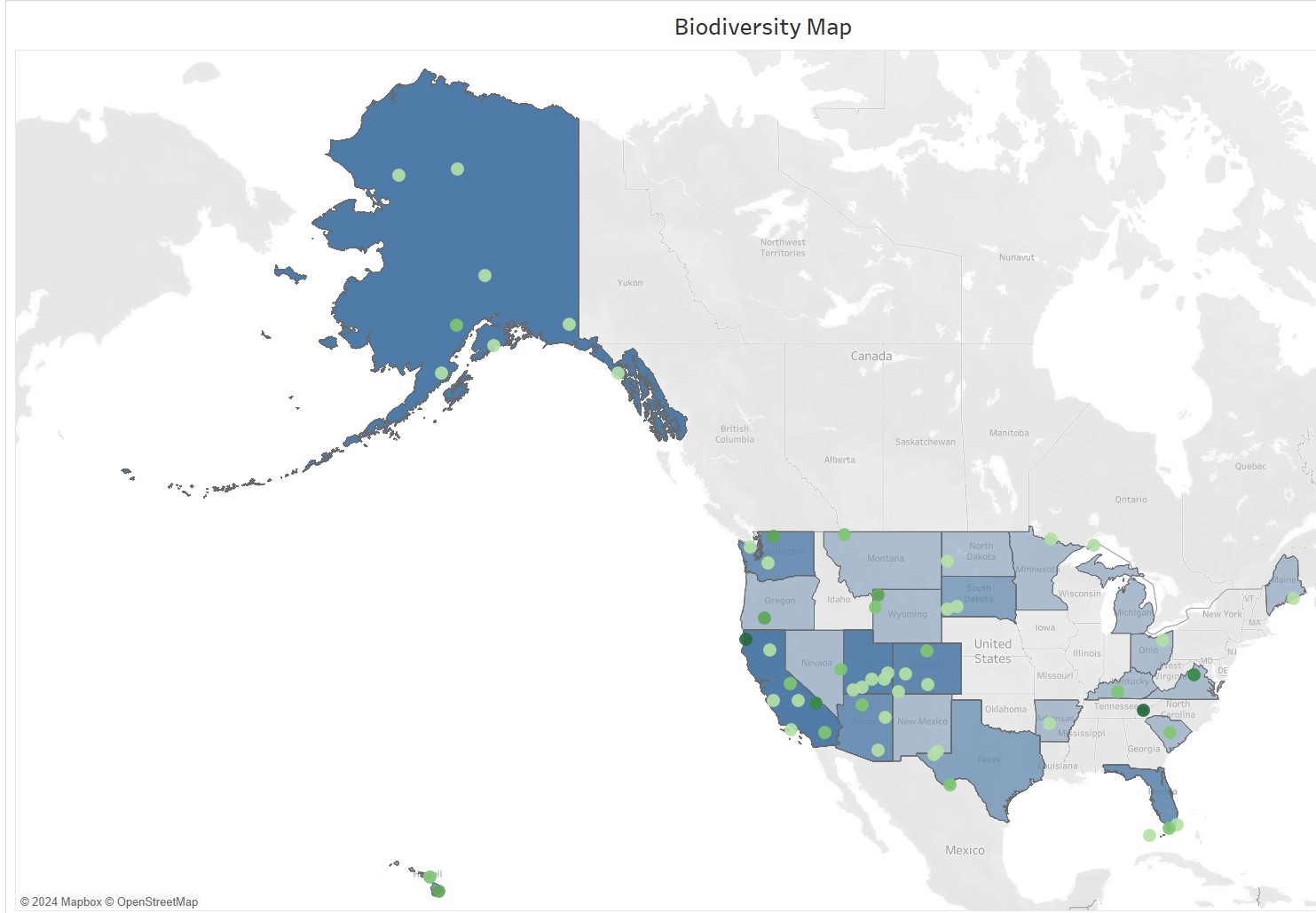
There is a wide range of biodiversity across all the national parks, even within regions of the United States. Both Great Smoky Mountains National Park (TN, NC) and Redwood National Park (CA) stand out as highly diverse parks for species. These parks represent exceptionally large and diverse habitats with a clear goal of conservation.

Click image to enlarge

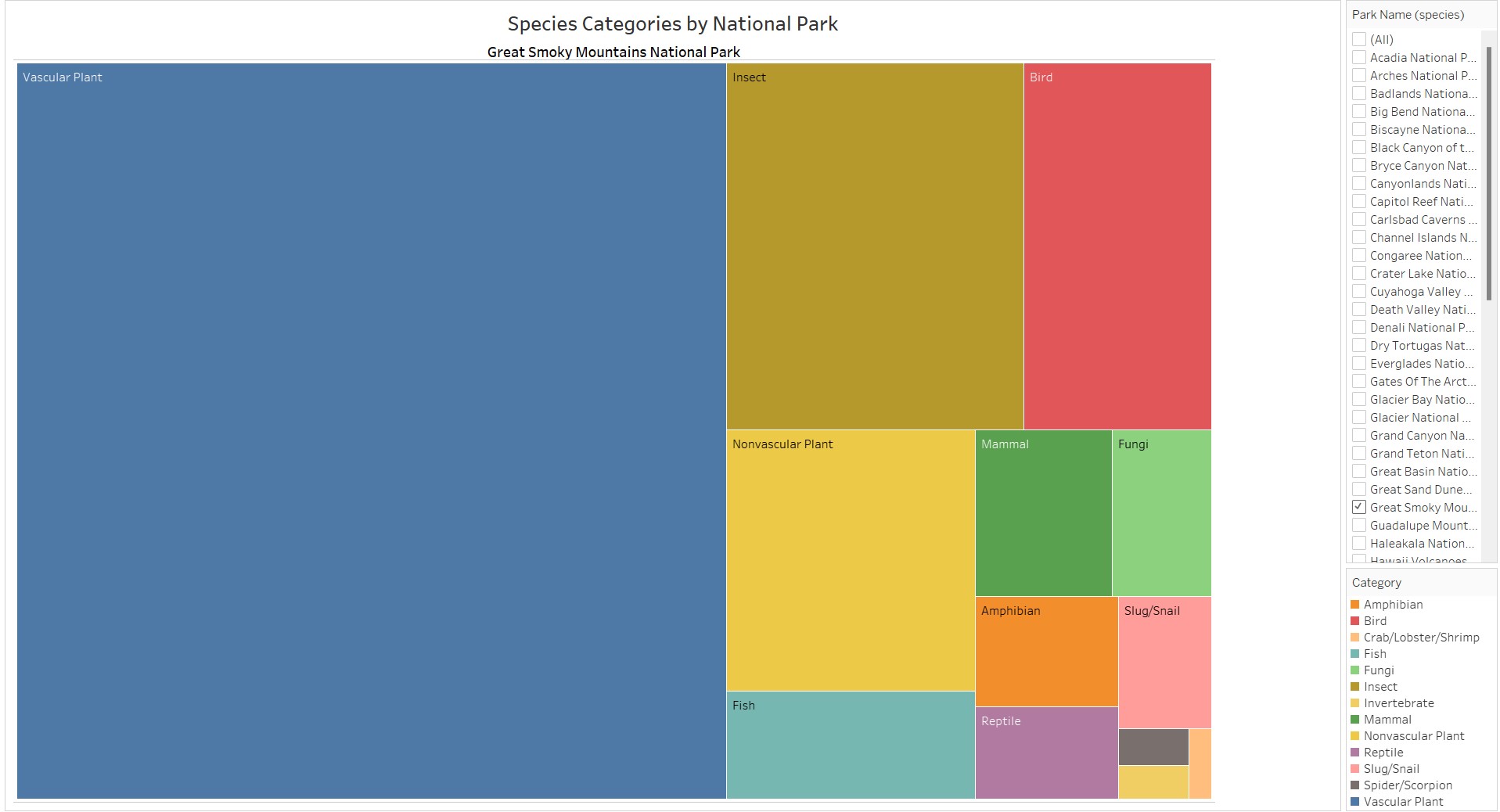
Species Category Breakdown by Park

This graph showcases just how diverse Great Smoky Mountains National Park is: it maintains 2,414 species of insects, 2,174 species of vascular plants, 632 species of fungi, 528 species of nonvascular plants, and additional bird, fish, spider, mammal, slug, invertebrate, amphibian, reptile, and shellfish species. Within the Tableau dashboard, you can see parks like Death Valley National Park with a high concentration of birds and Shenandoah National Park with a high number of vascular plants. Understanding where certain species are concentrated can help national park visitors decide on their next adventure. Studying how the number of species at each park has shifted over time can help tailor conservation efforts. Due to environmental shifts, it could be possible to migrate certain species to appropriate environments at other parks.

Click image to enlarge

Top Endangered Species

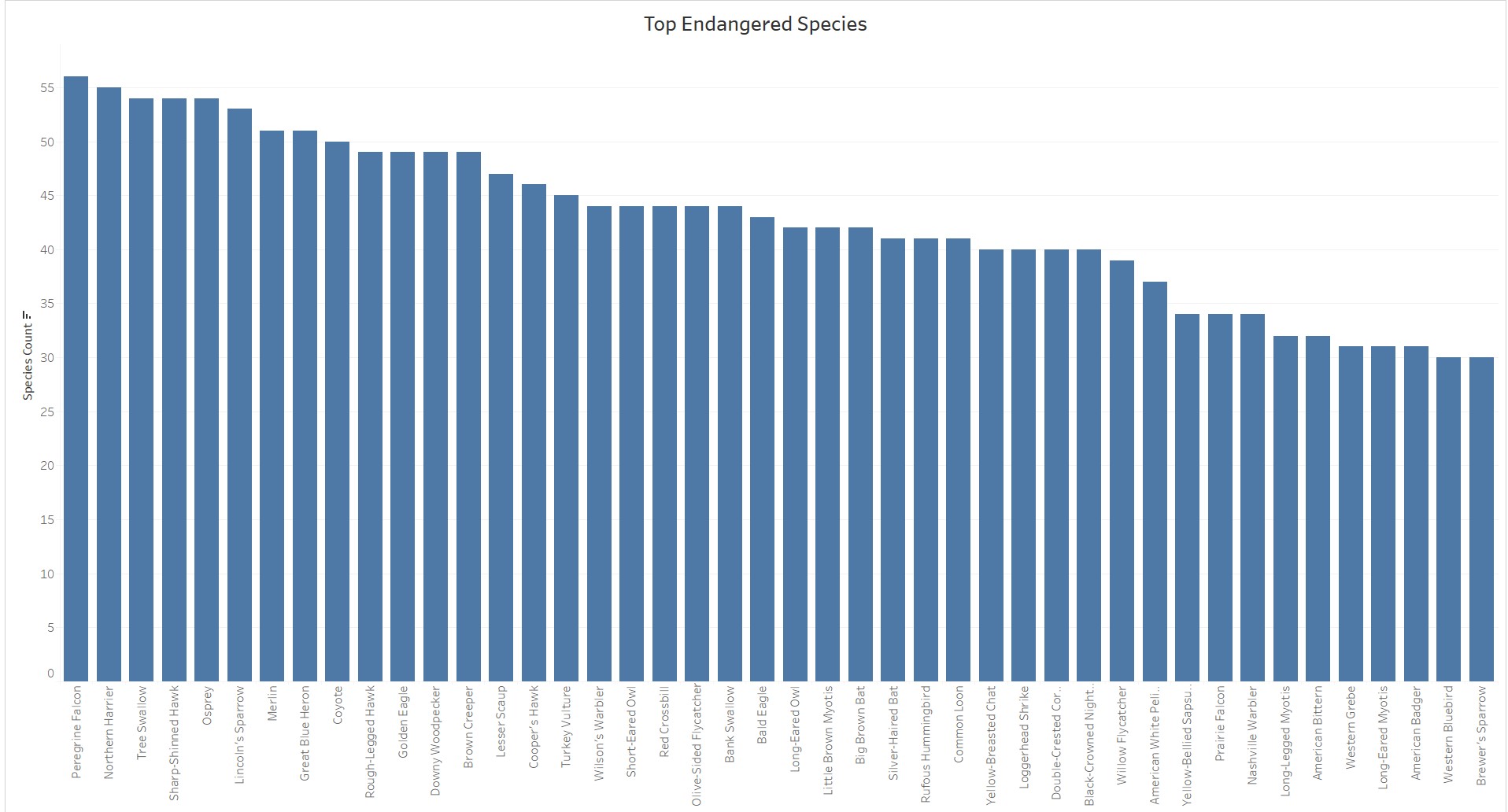
This graph highlights which species are amongst the endangered. For the purposes of this project, I included any species with a conservation status listed as "Endangered", "In Recovery", "Threatened", "Species of Concern", and "Proposed Endangered/Threatened". This graph provides valuable insight into common animals one might not think of as endangered, including the peregrine falcons, ospreys, and coyotes. Parks with these species should consider greater efforts at their preservation initiatives to protect the species and the habitat.

Click image to enlarge

Endangered Species by Park

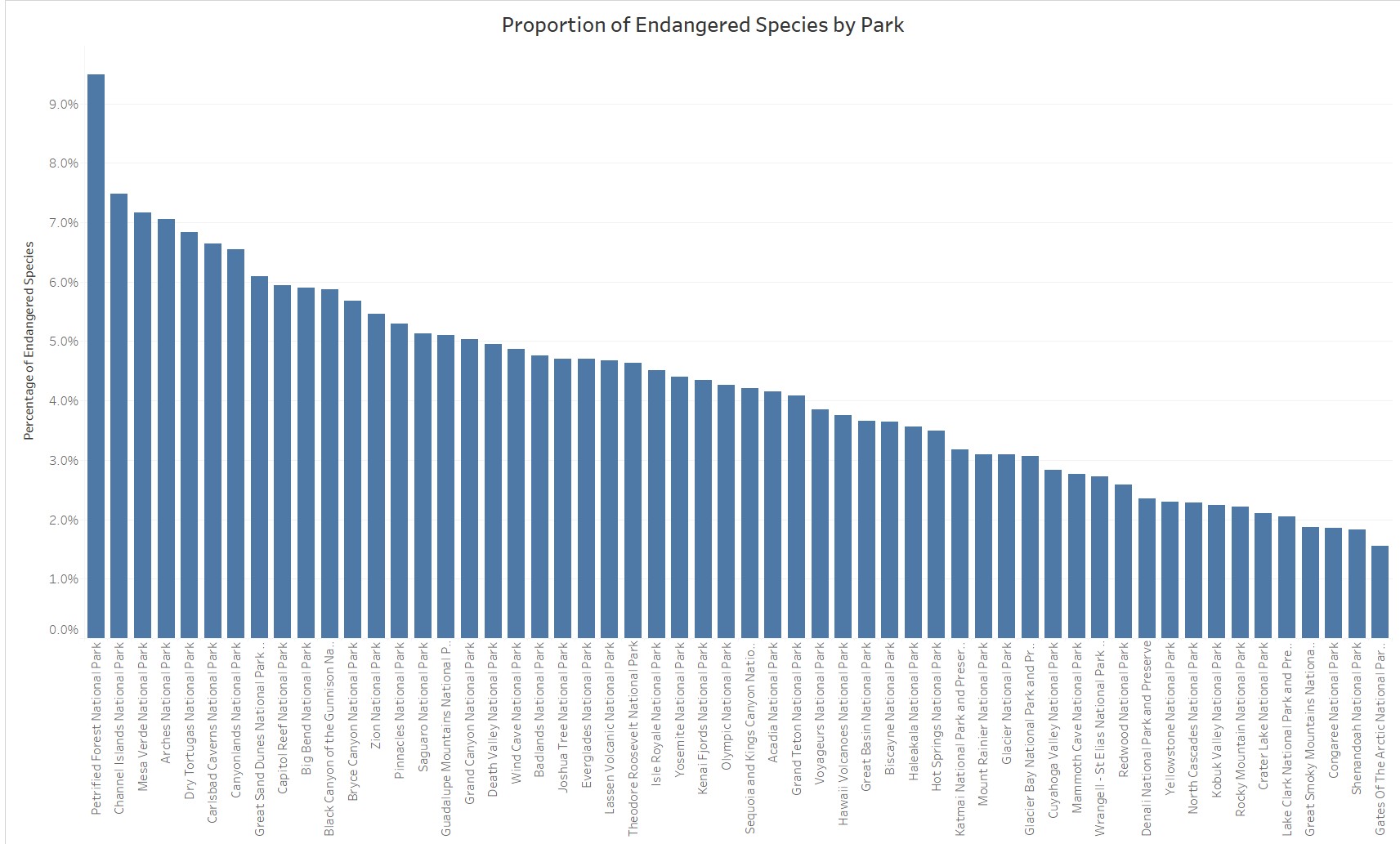
Petrified Forest National Park unfortunately stands out as a park with a high percentage of endangered species. There are mostly birds endangered within this park, which could be due to environmental shifts that affect the concentration of trees within the forest.

Click image to enlarge

My Personal National Park Journey

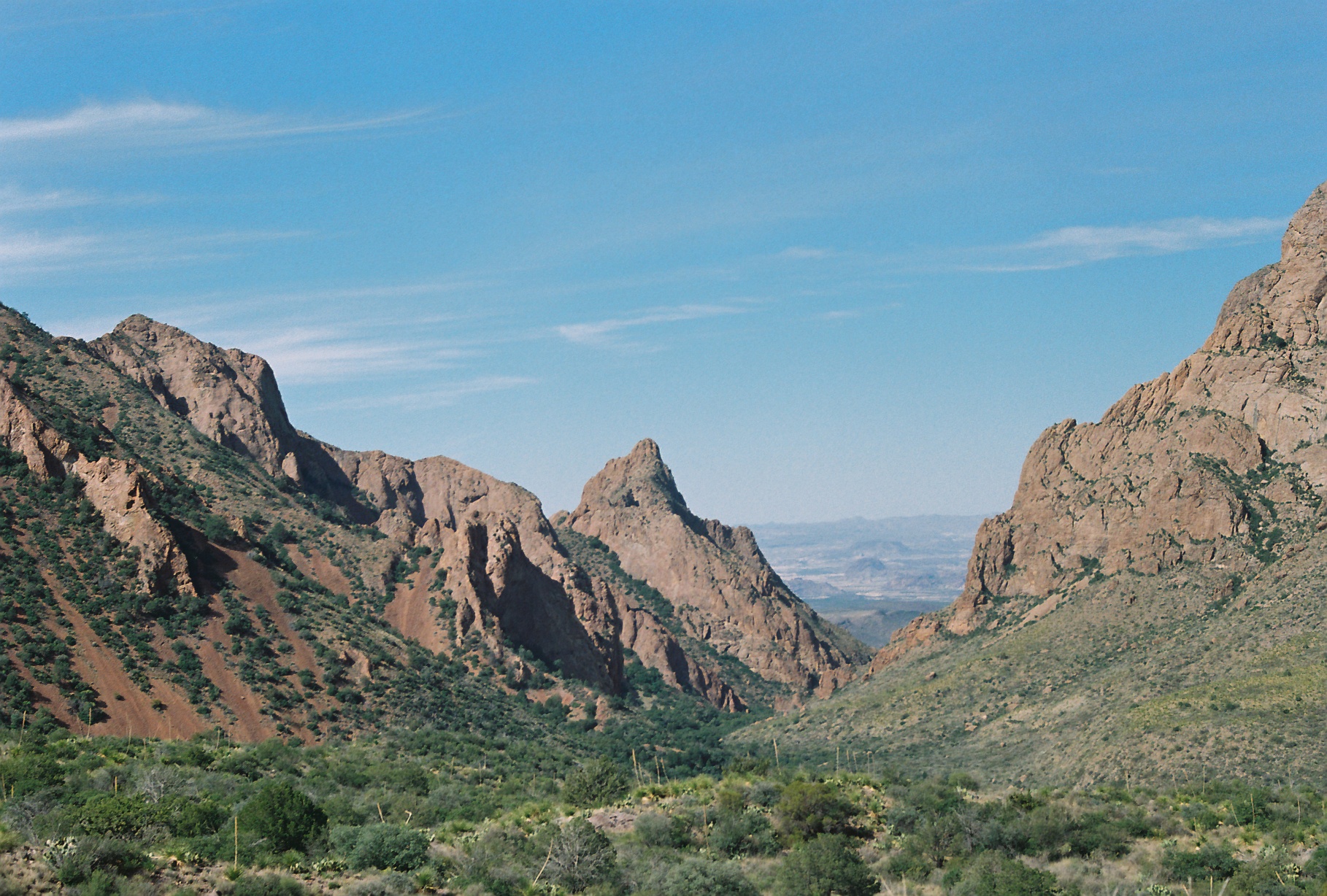
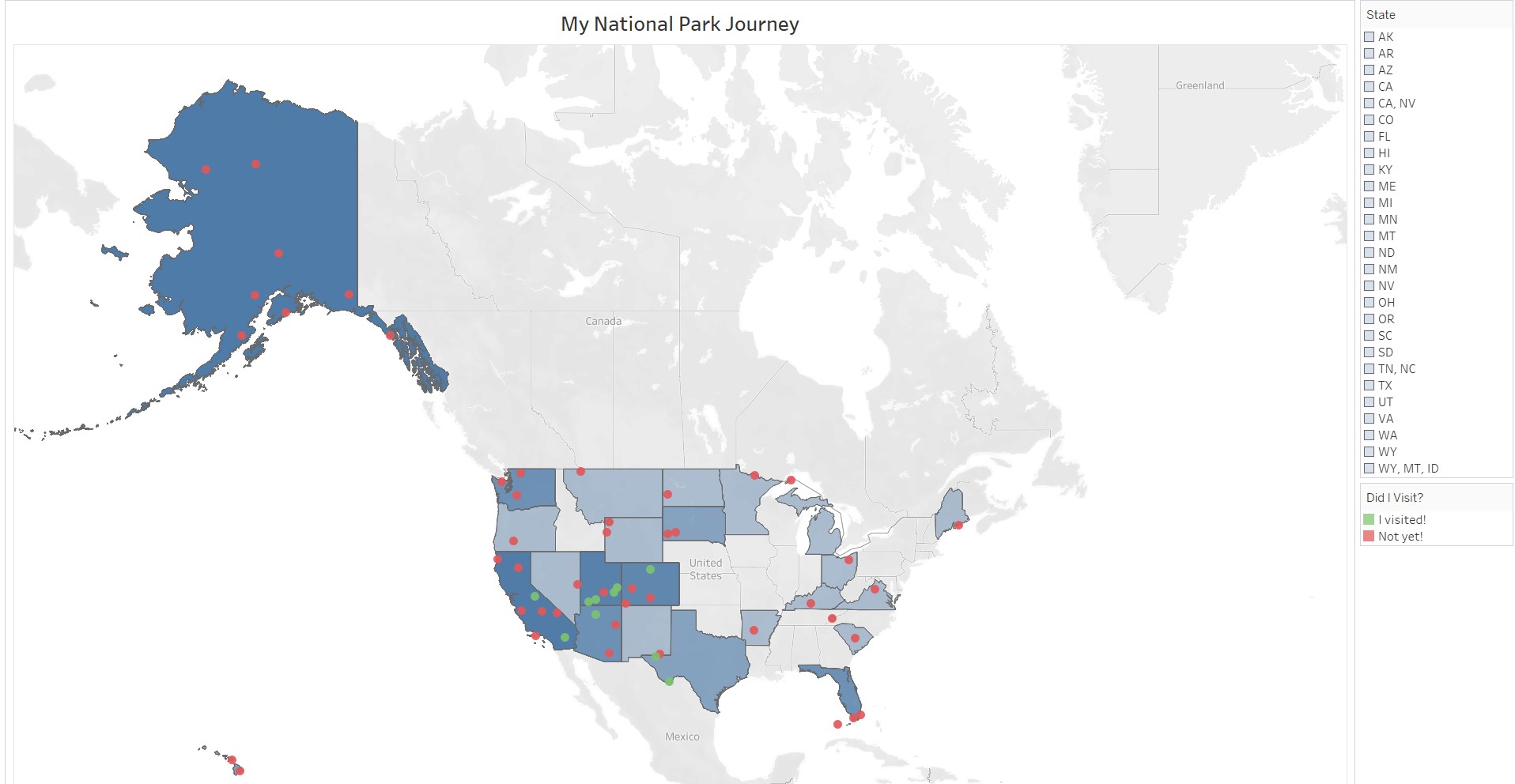
During my visit to ten national parks in Spring 2021, I took notice of the diverse ecosystems each park offered. Although I did not personally encounter many living species besides plants and the occasional bird, there were plenty of signs that detailed the vast species that each park offered. I look forward to visiting more national parks to gain further insight into ecosystems and any shifts due to environmental changes.

Conclusion

This analysis of the national parks in the United States underscores the importance in preserving biodiversity. The findings highlight the rich ecological diversity in certain parks, while showing areas of preservation concerns in others. A conscious effort to address these concerns to prevent endangered and extinct species is imperative for the future of national parks and our planet. By studying data such as this, we can better appreciate our planet and the distinct species that occupy it.