Data Overview

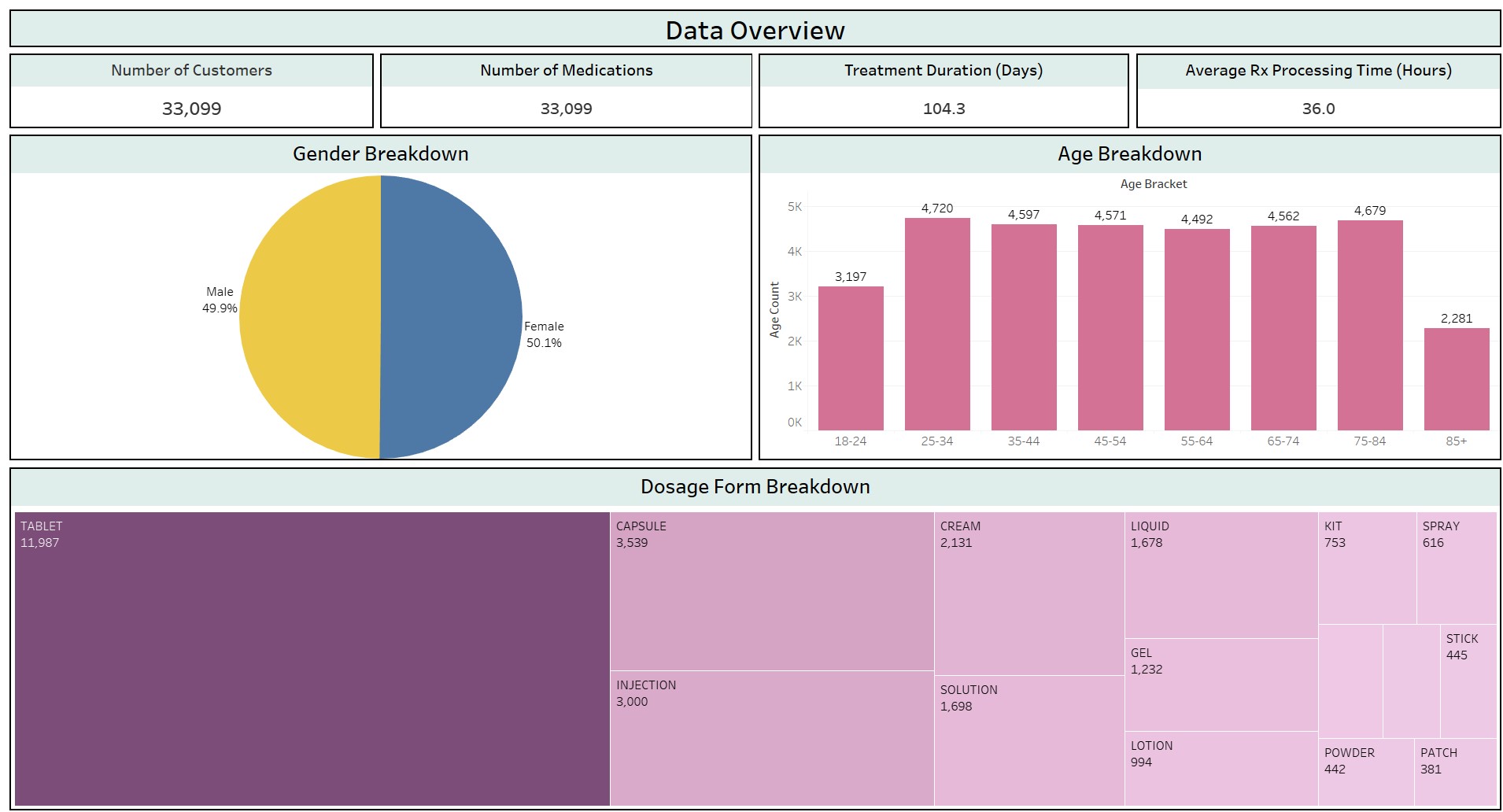
Using fake customer data and NDC's dataset for medications, the complete dataset includes:

  • Patient Information: ID, name, gender, age
  • Medication Information: medication name, NDC code, dosage form, stock levels, prescribed and dispensed medication
  • Temporal data: prescription time and dispensation time (processing time), treatment duration
  • Patient outcomes: medication adherence (did the patient take the medication?), pain levels before and after treatment
  • Patient Overview

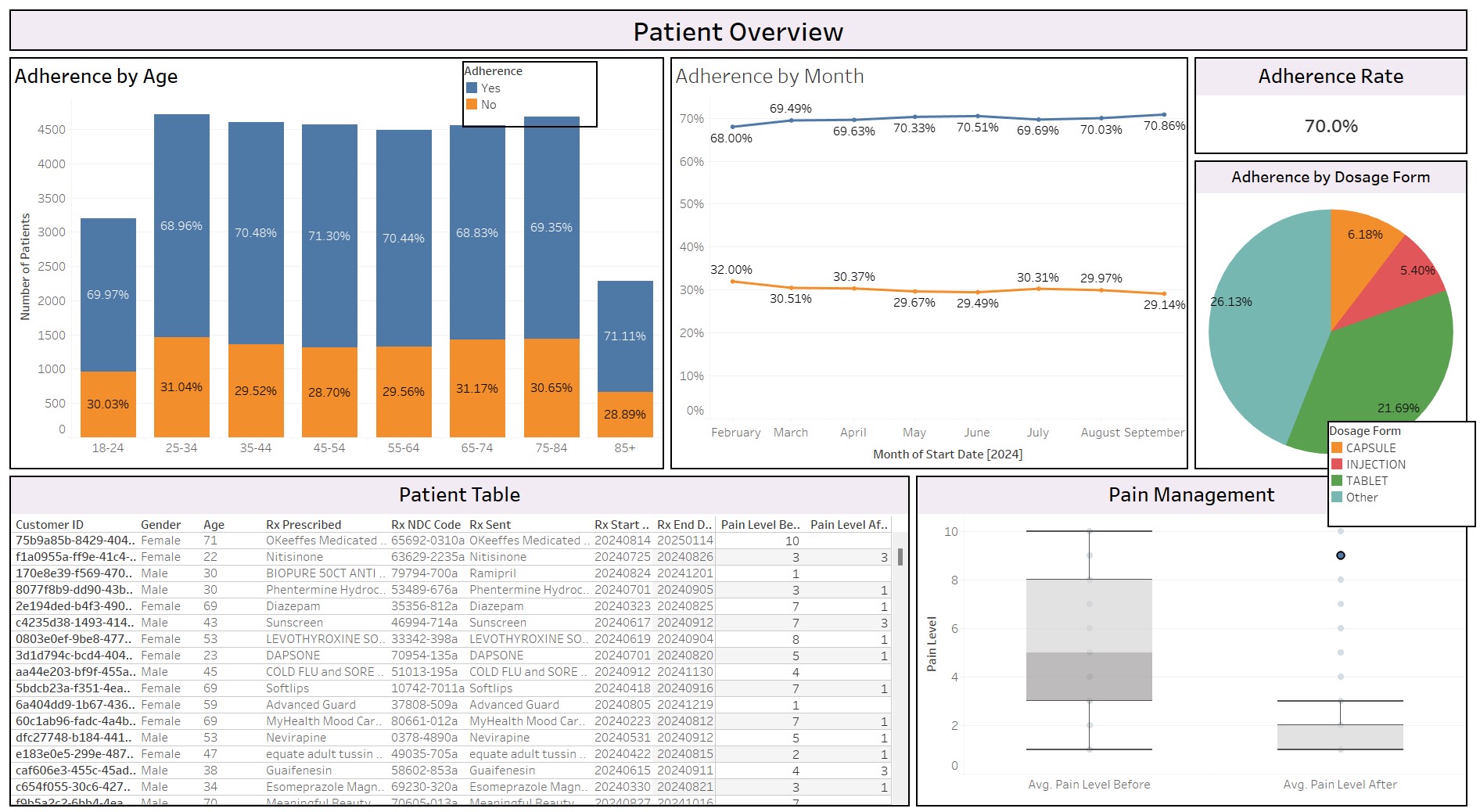
    This dashboard includes:

  • Adherence by age
  • Adherence by month
  • Adherence by dosage form (capsule, tablet, injection, and other)
  • Patient table with demographic information, the Rx prescribed and the Rx dispensed to patient, and pain levels
  • A boxplot comparing the pain levels before and after medication
  • Areas of Improvement

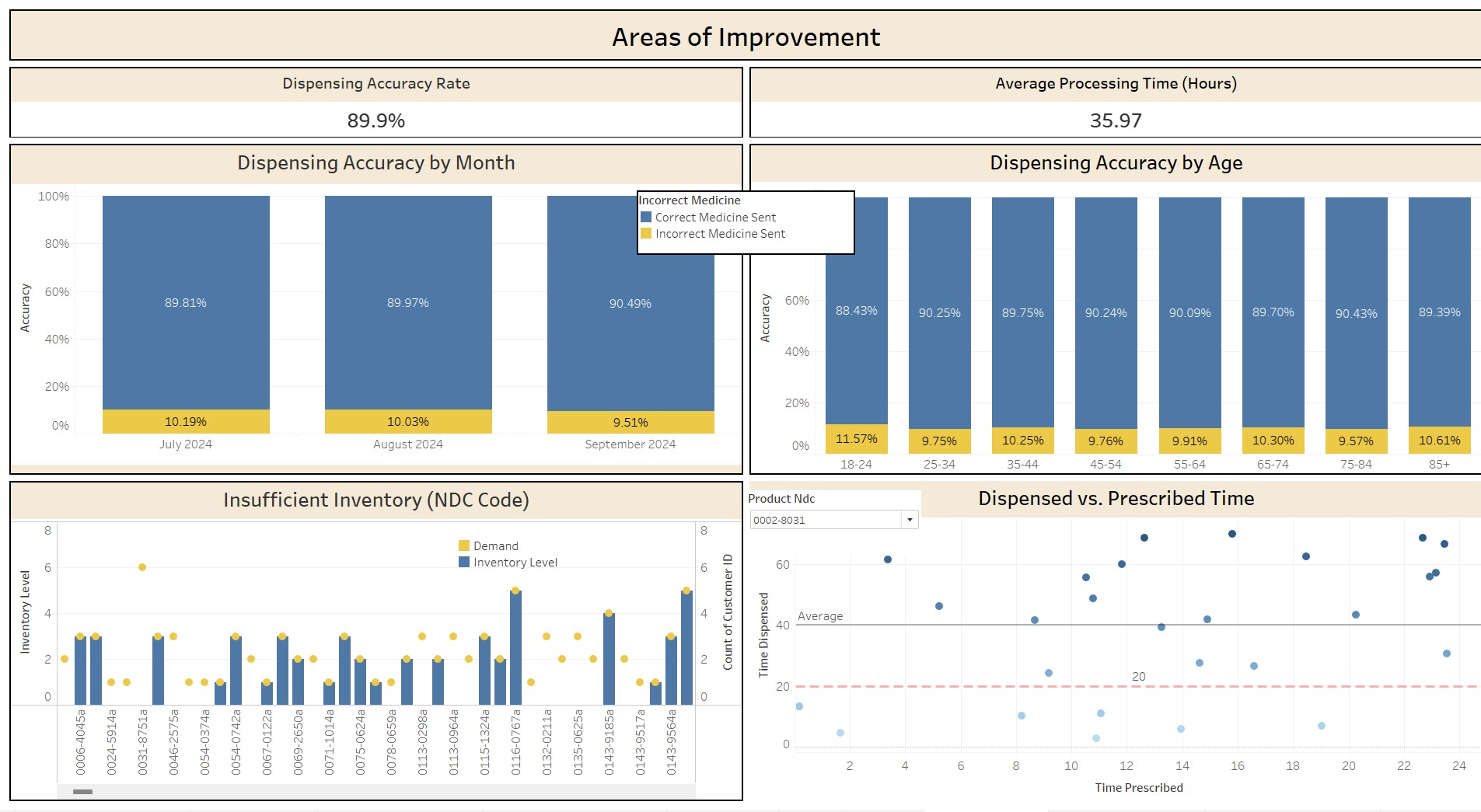
    In this dashboard, the following metrics are addressed:

  • Dispensing accuracy (overall)
  • Dispensing accuracy in previous 3 months
  • Dispensing accuracy by age
  • The supply vs. demand for each medication
  • Processing time (dispensed vs. prescribed time)
  • Key Findings and Recommendations

    Medication Adherence Rate

    Key Findings

  • Outside of a brief dip in July 2024, adherence rates have been just over 70% since May 2024
  • Within each age group, August 2024 had the highest adherence rates
  • Medications in the form of plasters, salves, and shampoos were among the lowest adherence rates for dosage forms.

  • Contributing Factors

  • Implemented medication reminder app in July 2024
  • Weekly pill organizers offered with each prescription

  • Recommendations

  • Conduct surveys to determine why certain patients didn't adhere to their medication
  • Monitor patients more frequently to ensure adherence
  • Label redesigns to help with readability
  • Pain Management

    Key Findings

  • 86% of patients reported a decrease in pain levels; on the 10-point scale, 53% of patients reported a decrease in pain levels of 5 or less points
  • 14% of patients reported no change in pain levels
  • No patients reported an increase in pain levels

  • Outliers

  • The medications Cyclobenzaprine Hydrochloride and Dextroamphetamine Sulfate stand out as outliers in pain levels reported after taking these medications

    Recommendations

  • Consider replacing medications that don't drastically improve pain levels
  • Compare medication schedules and timelines for the same medication to determine if longer (or shorter) durations affect a chance in pain level
  • Dispensing Accuracy and Processing Time

    Dispensing Accuracy

  • Dispensing Accuracy Rate: 89.9%
  • Most incorrectly dispensed medications were in tablet form.

  • Processing Time

  • Average processing time: 36 hours
  • All medications have a varied processing time, proving that specific medications won't be easier to process
  • Peak processing time is at 5:00pm

  • Recommendations

  • Redesign workflow to understand why dispensing inaccuracies occur
  • Implement QA processes to ensure accuracy
  • Set targeted processing time goals every month (possibly per day or hour)
  • Inventory Management

    Key Findings

  • 60% of medications were out of stock
  • Seasonal trends show that medications could be in low stock based on a high demand across several hospitals

  • Predictive Analysis

  • Using this analysis, we could predict the demand of certain medications and those similar to it
  • By studying market trends, we can determine the demand for other medications

  • Recommendations

  • Implement predictive analytics in an advanced inventory management system
  • Communicate with other health professionals and providers to understand the market
  • Create automations within a dashboard to flag low stocked medications